.png?v=1791281612)
Dennis Yoder and Greg Sullivan Share Insights on Innovative CHP Project
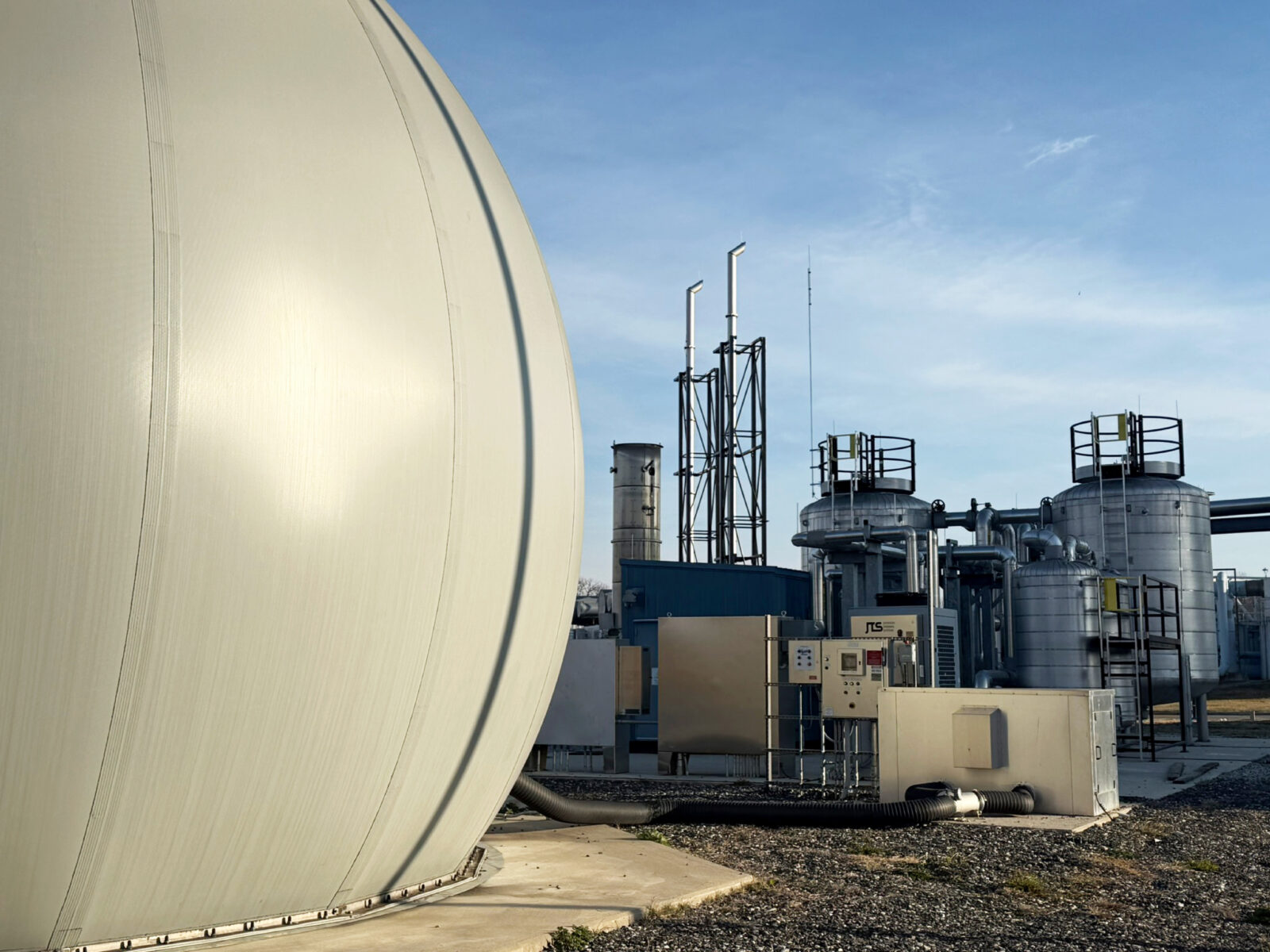
The Gloucester County Utilities Authority (GCUA) was faced with several operational challenges at its Wastewater Treatment Plant (WWTP) in West Deptford, NJ. The GCUA had previously used incinerators to reduce dewatered waste sludge to ash, a process that would have required significant capital improvements to comply with newly established USEPA regulations. The Authority moved forward changing their sludge processing to anaerobic digestion, with RVE providing engineering design services for two egg-shaped anaerobic digesters. The second phase of the project was the Combined Heat and Power (CHP) System using biogas.
A CHP system is a highly efficient and sustainable energy recovery solution for wastewater treatment facilities operating anaerobic digestion systems. For the GCUA, this solution was not only more cost-effective, but also significantly reduced pollution and created renewable energy production from the methane-rich biogas produced from the breakdown of the sludge. Two 600-kW CHP dual fuel source (natural gas and biogas) engines provide redundancy and the GCUA is now able to produce 80% of their power needs. This enables the plant to operate during blackouts and allows it to restart independently in the event of a complete loss of external power, adding a resiliency element to the WWTP. The project received a Grand Honor Award from the American Council of Engineering Companies of New Jersey (ACECNJ).
In an article for Treatment Plant Operator, Dennis Yoder, PE, Principal and Greg Sullivan, PE, Senior Associate, discuss the project evolution and the significant impact it has on the wastewater treatment process. You can read the full article here.
More Articles

Matt Malozi Explores the Evolving Healthcare Facilities Market
In an article for Helthcare Construction + Operations News, Matt Malozi discusses the shift in facilities strategy for…
Stephanie Cuthbert Discusses Utility Infrastructure Prioritization
In an article for Informed Infrastructure, Stephanie Cuthbert, PE, CME, shares her perspective on how communities can…
Vanessa Nedrick Discusses Strategies to Navigate Water Infrastructure Challenges
In an article for Keystone Water Quality Manager, Vanessa Nedrick, PE, MSEM shares her thoughts on what communities can…